Strength, steadiness and memory, measured
Preserving independence, pinch by pinch.
A five-minute Pebl check measures each resident's strength, dexterity, reaction time and memory against their own usual level, so your care team can see who's changed.
- per assessment
- 5 minutes
- per one device
- 4+ measures
- many patients
- One device

Developed by JHU Students
Incubated by the Pava Marie LaPere Center for Entrepreneurship
NSF I-Corps
Completed the NSF I-Corps regional program at Johns Hopkins University

Pebl Health in AgeTech
Pebl Health is an AgeTech Collaborative from AARP Portfolio Company
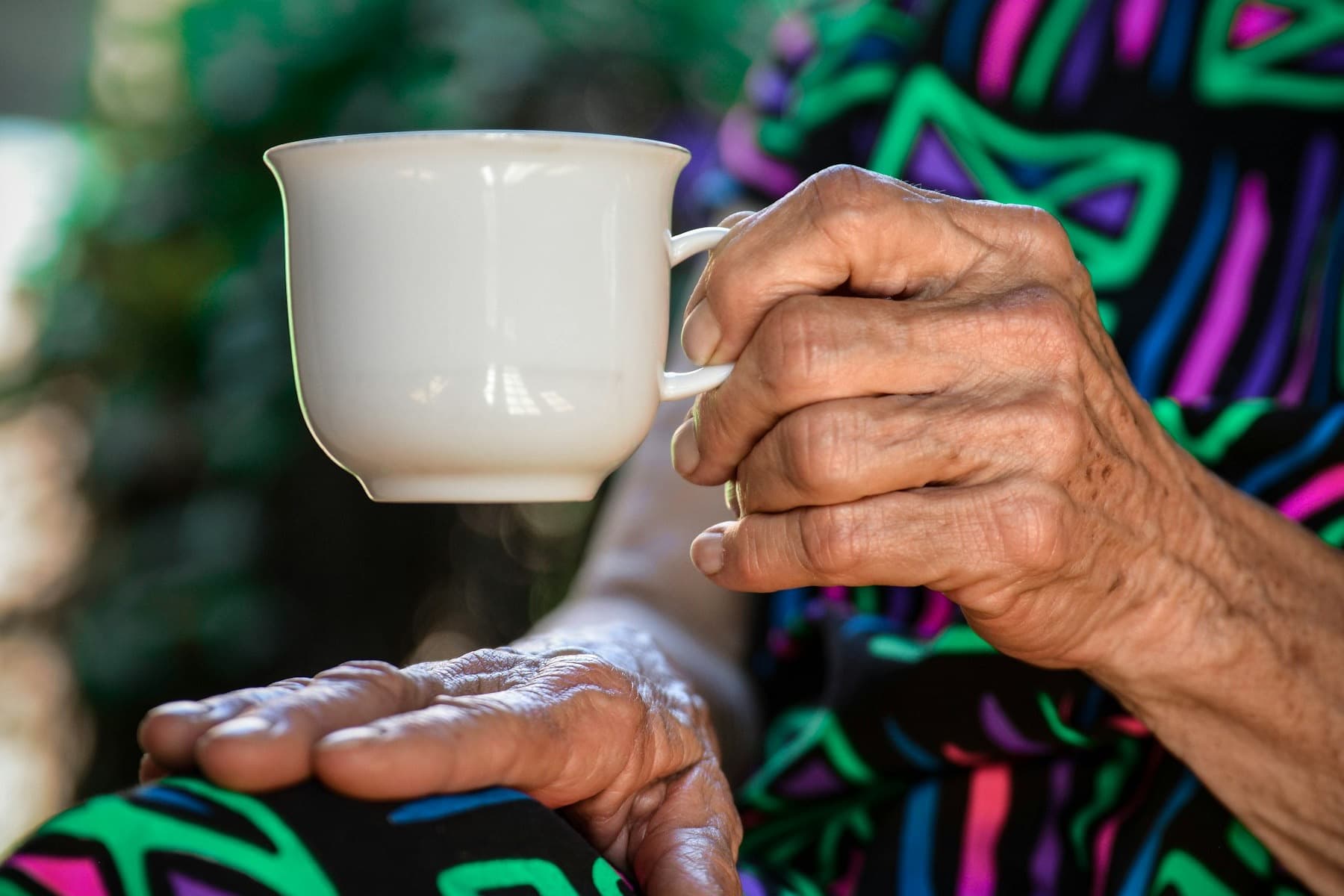
Between screens, changes in strength, tremor and memory go unmeasured.
A drop in strength, steadiness, reaction time or memory is one of the earliest signs that someone is heading toward a fall, a hospital stay or losing their independence. Today it's checked with subjective scales a few times a year, if at all. Pebl turns it into a number you can track every visit.
“With Pebl, older adults check their strength, dexterity, reaction time and memory in a few minutes, right at their fingertips.”
Meet Pebl
Four measures. One device. Under five minutes.

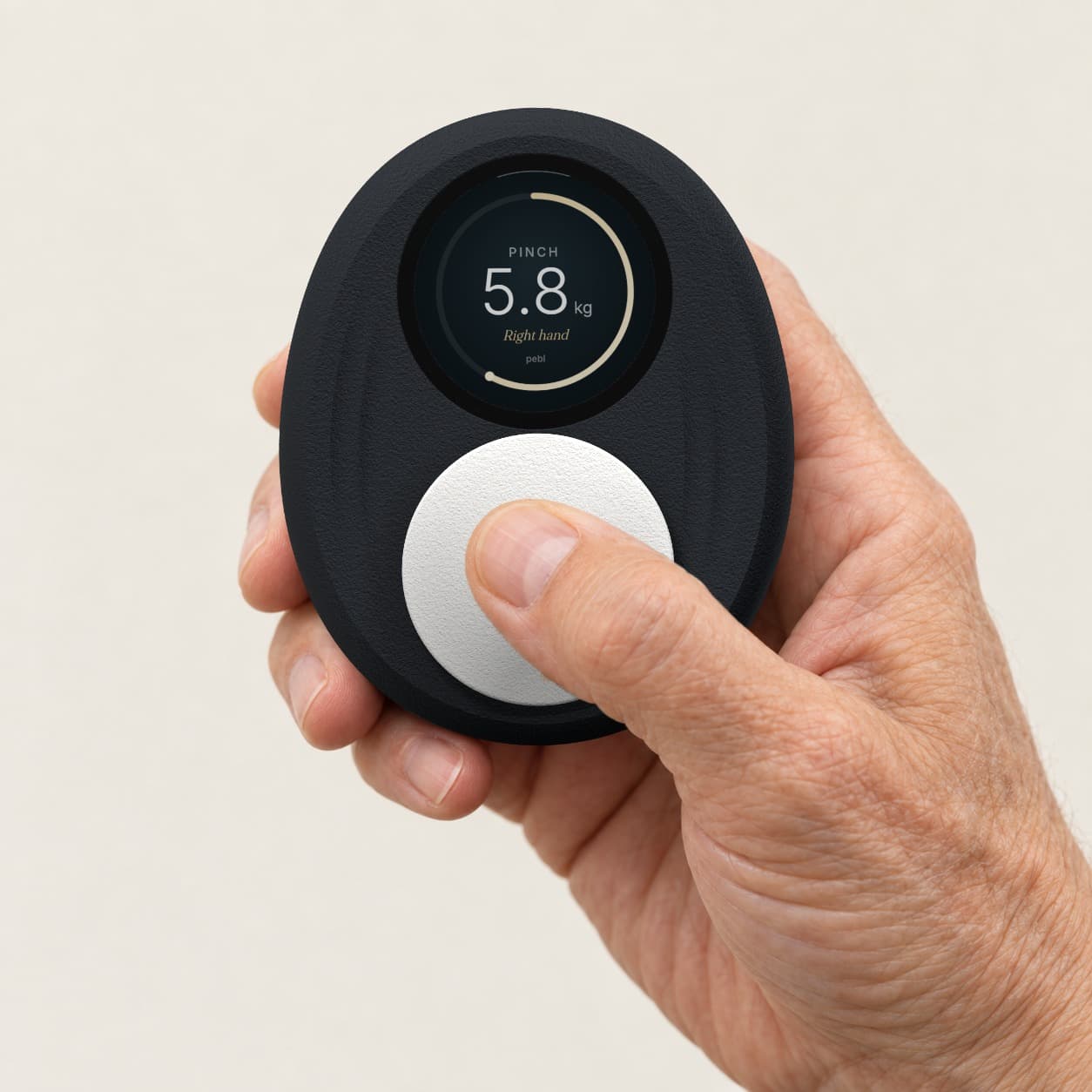
Strength
Pinch force in kilograms, every session.

Dexterity
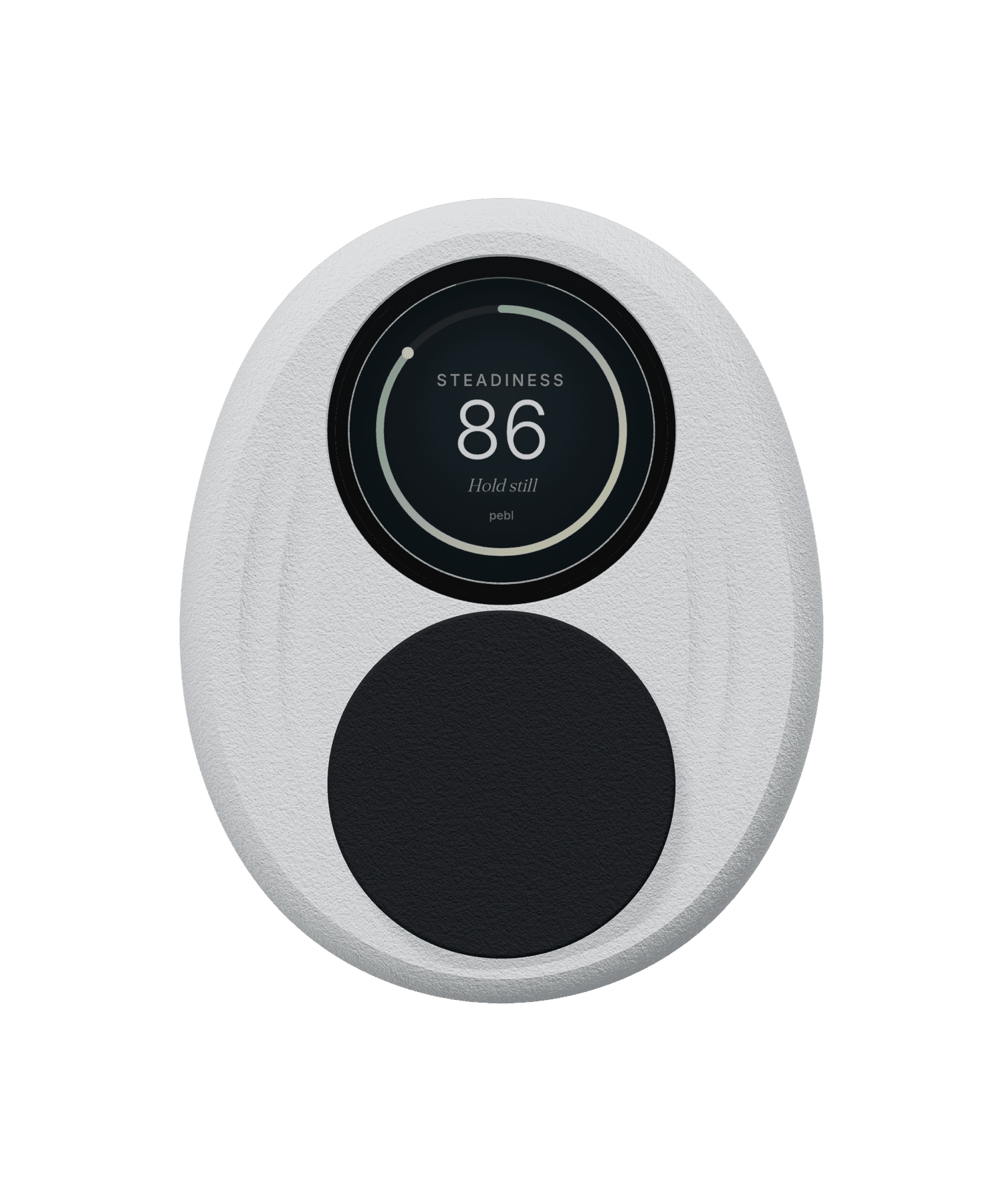
Fine motor control and steadiness, including tremor.

Reaction
How quickly the hand responds, in milliseconds.

Memory
Short memory tasks, built into the same check.

Sensation
Vibration threshold and more.
Coming Soon


- 1
Hand it over.
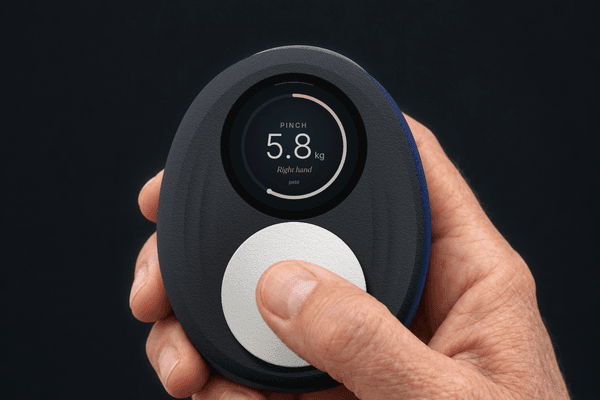
A resident picks up Pebl, thumb on the button, and follows short prompts on an iPad or phone: squeeze, hold steady, react, remember. The whole check takes under five minutes.
- 2
See the results.
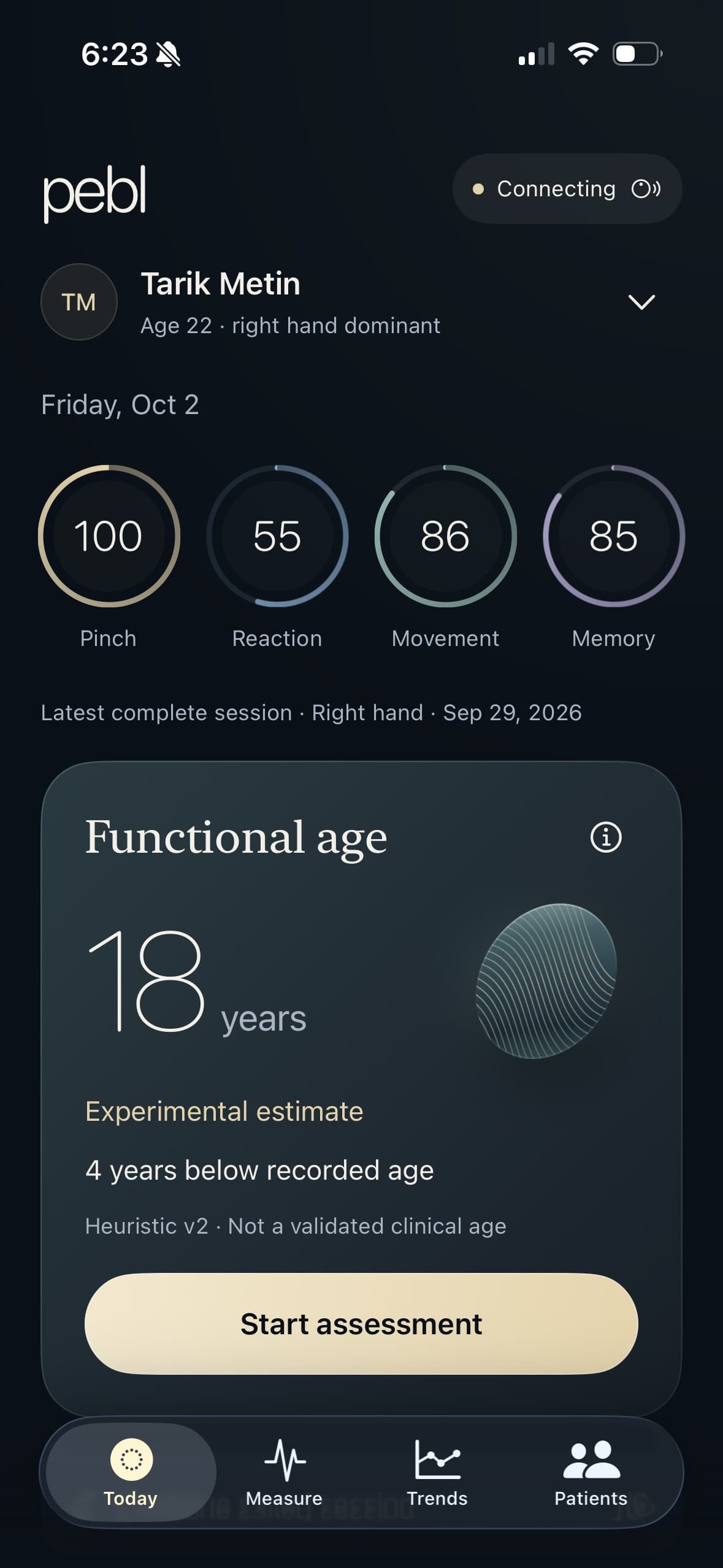
Scores appear on the iPad or phone right away and save to the resident's Pebl record, with no manual charting.
M. Chen - Friday, Oct 2


100
Pinch

55
Reaction

86
Movement

85
Memory
- 3
Follow the trend.
Pebl learns each resident's usual level, their baseline, and charts how they change over weeks. When something shifts, your team decides what happens next.


Grip Force - 90-Day Trend
INTERVENE


In your community
Two ways to run Pebl.
Your team runs it
A caregiver or med tech hands Pebl over and follows the prompts on the iPad.
Pebl runs it
A Pebl coordinator comes on site on the days you agree and runs the checks.
We set the schedule with you, and each resident chooses whether to take part. Tell us about your community and we'll talk through which fits and what it costs.
The score
One score for every resident, sorted by who needs attention.
Pebl combines the four measures into one score against each resident's own baseline. Stable residents stay on routine checks, and anyone who's changed moves to the top.
A. Patel, 79
Room 214. Last exam today at 9:42.
Intervene
Baseline 61, now −18
43
| Measure | This exam | Baseline | Change | 90 days |
|---|---|---|---|---|
| Strength | 4.3kg | 4.5 | −4%Within range | |
| Dexterity | 60of 100 | 68 | −12%Below range | |
| Reaction | 478ms | 392 | +22%Slower than range | |
| Memory | 5steps | 6 | −17%Below range |
Pebl score, last 90 days
Their own baseline range
Lorazepam started
See change while there's still time to act on it.
Proactive, not reactive
Your team sees who has changed since their last check, before it shows up as an incident.
Something families can see
A regular check with results on the record is easy to explain on a tour and easy to point to afterwards.
Time to add support
Earlier notice gives your team room to bring in therapy or adjust a care plan while the resident is still doing well where they live.
Pebl AI learns each resident's normal across all four measures.
Pebl AI builds a baseline for every resident and flags meaningful changes against it for your clinicians to review.


Cognition
Memory and reaction time, checked as often as strength.
A change in thinking is often noticed late, after a near miss or a hard conversation with the family. Every Pebl check includes a reaction-time task and a memory task, scored against the resident's own earlier results, so your team can see a change and plan support sooner. Pebl does not diagnose dementia or any other condition.

We're working with NeuroField to take cognitive testing on Pebl to the next level.
Reaction time
The screen shows a stream of common cues and an occasional rare one. The resident presses only for the rare one, and Pebl records the response in milliseconds.
Memory
Pebl shows a short sequence and the resident repeats it. The sequence gets longer as they get it right.
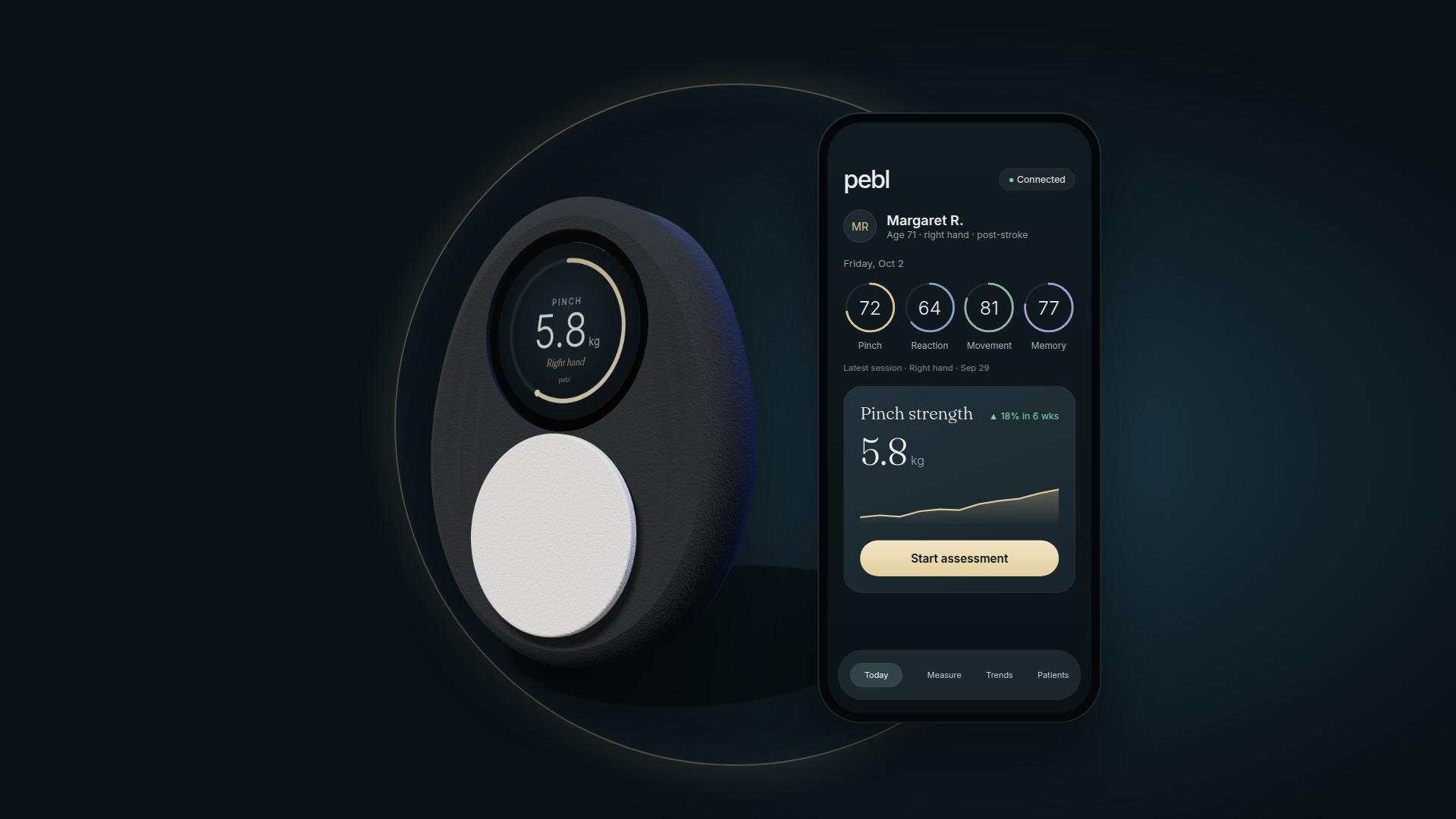
Pebl measures. The app keeps the record.
Pebl captures each reading. The app, on an iPad or phone, shows it, tracks it over time and turns it into reports.
For families
Families see how their loved one is doing.
With the resident's permission, family members can see the same results on their phone and get a short update when something changes. Each update says what changed, what your team is doing about it and whether the family needs to do anything.
Ruth, this week
Changed
Ruth's grip strength is a little lower than her usual level. Her memory and reaction time are steady.
- Do you need to do anything?
- No, not right now.
- What the care team is doing
- Her nurse has asked the therapy team to see her this week.
- Next check
- Thursday
Every update uses one of three words: Steady, Changed or Needs follow-up.
Questions
The check
How long does a check take?
Under five minutes for all four measures.
Who runs the check?
Your own team, or a Pebl coordinator who comes on site.
How often are residents checked?
As often as you choose. We set the schedule with you.
Do residents have to take part?
No. Taking part is each resident's choice.
The results
Does Pebl diagnose?
Pebl tracks change against each person's own baseline, meaning their usual level, and flags it for your clinicians to review. Diagnosis and care decisions stay with your team.
What if someone has an off day?
One low result doesn't raise a flag by itself. Pebl compares each result with the resident's own usual level and looks at the trend across checks.
What do families see?
With the resident's permission, the same results on their phone and a short update when something changes.
Getting started
How long does setup take?
Charge Pebl, pair it with an iPad or phone in the app, and you're ready. It takes a few minutes.
Can one device be used with many residents?
Yes. Pebl is built for use across many residents. Clean it with your usual disinfectant wipes between uses.
What does it cost?
It depends on who runs the checks and how many residents take part. Get in touch and we'll walk you through it.
Become a founding site
We're working with a small group of founding communities this year. Founding sites help shape what we build next and lock in their rate.
Our team
Developed at Johns Hopkins University
Pebl was developed at Johns Hopkins University. As founding sites go live, we'll share who they are and what they've seen.

Ibrahim Jehanzeb
Co-Founder and CEO

Tarik Metin
Co-Founder and CTO

Mohammed Siam
Founding Software Engineer
